Call (855) 551-2628 Get Transport Quote
Boat Toronto
  • Instagram
  • Home
  • About
  • Boat Transportation
  • Other Services
    • Storage
    • Winterization / Shrink Wrap
    • Maintenance / Repairs
  • Gallery
  • Reviews
  • GET TRANSPORT QUOTE
  • Search
  • Menu Menu
Boat Maintenance, Boating Tips & Guides, Marine Engine Care, Toronto Marine Services, Winterization Services

Marine Engine Fogging Oil Service: Complete Protection Guide

Professional marine technician applying fogging oil to an outboard engine for winterization in Toronto

Table of Contents

  • Marine Engine Fogging Oil Service in Toronto, Ontario: The Key to Winter Preservation
  • Prepare for Marine Engine Fogging in Toronto, Ontario
  • Gather the Right Supplies for Fogging in Toronto, Ontario
  • Warm Up and Disconnect Fuel Lines
  • Apply Fogging Oil to the Engine Intake
  • Shut Down and Seal the Engine
  • Protect External Engine Components
  • Professional Fogging at Your Dock in Toronto, Ontario
  • Check Your Engine After Winter Storage
  • Troubleshooting Common Fogging Issues for Marine Engines in Toronto, Ontario
  • Wrap Up Your Marine Engine Winterization with Fogging Service

Marine Engine Fogging Oil Service in Toronto, Ontario: The Key to Winter Preservation

A marine engine fogging oil service is a crucial winter preservation step for boat engines stored during Toronto’s cold off-season. During normal operation, combustion byproducts leave moisture and acidic residues inside the engine. Without marine engine winterization measures like fogging, these contaminants cause internal engine corrosion that can seize pistons and damage cylinder walls by spring. We apply a marine fogging oil treatment that coats all internal surfaces — cylinder walls, piston rings, and valve stems — with a thick protective film. For inboard engines, we spray the oil into the intake while the engine is running; for outboard motors, we inject it directly through spark plug ports and manually crank the engine to distribute the coating evenly. This internal engine corrosion protection is especially critical for boats stored in damp or unheated environments typical of outdoor shrink-wrapped storage. Entrusting your engine to our licensed technicians ensures thorough application and long-term preservation. At Boat Toronto Inc., our professional fogging oil service forms a key part of complete winterization packages, ensuring reliable starts and avoiding expensive spring repairs.

Prepare for Marine Engine Fogging in Toronto, Ontario

Preparing your boat for winter storage begins with a marine engine fogging oil service to protect internal engine components from corrosion. During Ontario’s harsh winters, moisture inside an idle engine can cause rust on cylinder walls and piston rings. Applying a marine fogging oil treatment creates a protective coating that provides effective internal engine corrosion protection, ensuring your engine’s reliability each spring.

Before you start fogging, gather the necessary supplies: marine-grade fogging oil, safety goggles, and a fuel shut-off tool. Always use marine-grade fogging oil formulated specifically for marine engines. Stabilize your fuel, run the engine to operating temperature, and then disconnect the fuel supply to prepare for the oil application. These preparatory steps are a key part of a comprehensive winterization plan, and we recommend following the marine engine winterization checklist provided by Boat Toronto for detailed guidance.

Once your engine is prepped and your supplies are in hand, you can proceed with the fogging procedure described in the next section. Proper preparation reduces the risk of internal damage and gives you peace of mind during the long Toronto winter.

Gather the Right Supplies for Fogging in Toronto, Ontario

Before you begin, having the correct materials on hand makes the process straightforward and safe. We recommend starting with a comprehensive marine engine fogging oil service by choosing a high-quality, marine-grade fogging oil designed specifically for internal engine corrosion protection. This is an essential step of proper marine engine winterization, as the oil coats cylinder walls and internal surfaces to prevent rust during long-term storage.

In addition to the fogging oil, you will need a spark plug socket and wrench, a funnel for precise application, and absorbent rags for cleanup. Always wear safety glasses and chemical-resistant gloves when handling any fogging product, as the chemicals can irritate skin and eyes.

These supplies are available at local marine parts stores in Toronto, Ontario, or through specialized online retailers. Boat Toronto’s winterization guidelines confirm that using a dedicated marine fogging oil treatment is the most effective way to protect your engine through the off-season. With everything gathered, you are ready to move on to the step-by-step fogging procedure.

Warm Up and Disconnect Fuel Lines

Now that you understand the importance of winterization, the first hands-on step is warming the engine. We start by running the motor to normal operating temperature, which thins the oil and allows it to circulate fully before the boat sits in storage. According to Mercury Marine outboard engines guidelines, this critical procedure helps prevent fuel system varnishing and ensures compliance with warranty terms.

Next, we disconnect the main fuel line at the engine connection while keeping the engine running. Allowing it to stall from fuel starvation is the most effective way to clear the carburetor of residual fuel, providing essential internal engine corrosion protection for the months ahead. Always perform this in a well-ventilated area to avoid the accumulation of exhaust fumes.

With the engine warm and fuel lines disconnected, the motor is ready for marine fogging oil treatment. This simple but vital sequence sets the foundation for a complete marine engine fogging oil service that safeguards your investment through the off-season.

Apply Fogging Oil to the Engine Intake

A professional marine engine fogging oil service is an essential step in winterizing your engine. This process delivers internal engine corrosion protection by coating cylinder walls and components with a protective film. This marine fogging oil treatment prevents rust and pitting while your boat is in storage.

  • Remove the flame arrestor or air filter to expose the intake, then start the engine and let it idle to reach operating temperature.
  • Spray marine-grade fogging oil into each carburetor throat or throttle body while the engine runs. Continue until the engine stalls, indicating the oil has coated the cylinders and valves.
  • For fuel-injected engines, use a dedicated kit that introduces oil through a vacuum line or throttle body; follow your engine manufacturer’s instructions.
  • After the engine stalls, turn off the ignition and replace the flame arrestor or air filter. Work in a well-ventilated area.

This simple process helps protect your investment throughout the off-season.

Vertical process flow showing four steps to apply fogging oil to a marine engine intake
Four-step process for applying fogging oil to a marine engine

After fogging, the engine is ready for storage or further winterization steps. For fogging oil and other marine maintenance supplies, visit West Marine.

Shut Down and Seal the Engine

Once the hull is prepped, turn attention to the engine. A complete marine engine fogging oil service is critical for shutting down and sealing your power plant. The purpose is simple: coat cylinder walls, piston rings, and valve seats with a protective film that delivers internal engine corrosion protection while the boat sits idle for months. Without this step, condensation can form on bare metal surfaces and lead to pitting or seizing.

Start by running the engine until it reaches normal operating temperature, then shut it off. Remove the air filter and, while a second person cranks the engine in short bursts, spray a generous volume of marine fogging oil treatment directly into the carburetor or throttle-body intake. Turn the engine over two or three more times after the last spray to spread the oil evenly across all internal surfaces. Follow up by sealing the exhaust outlet and air intake with tape or rubber plugs, which blocks moist air from entering the combustion chambers.

Change the engine oil and filter after fogging is complete so that acidic blow-by and suspended contaminants are drained away before storage. Taking these steps now helps prevent internal rust and makes for a smoother, drama-free startup when spring arrives. A properly fogged and sealed engine is ready for the next phase: covering and storing the boat.

Protect External Engine Components

While fuel system care is essential, we must also address the external components of your boat’s engine—the intake manifold, exhaust risers, and fuel injectors—that remain vulnerable to moisture and corrosion during storage. Our winterization process includes a critical step: a marine engine fogging oil service. This treatment sprays a specialized fogging oil into the engine’s intake while it runs, allowing the mist to coat internal surfaces and displace moisture. As the engine shuts off, the oil creates a durable protective layer that provides essential internal engine corrosion protection.

A proper marine fogging oil treatment is the most effective defense against the rust and pitting that can silently damage precision components over the winter. Without it, condensation can lead to expensive repairs, from seized piston rings to corroded valve seats. We ensure this fogging oil application is performed thoroughly, sealing your engine’s internals for the months ahead and connecting this protection directly to your boat’s reliability and safe operation when spring arrives. With the engine safeguarded, the next vital step is to turn our attention to the vessel’s interior and hull.

Professional Fogging at Your Dock in Toronto, Ontario

Fogging is a crucial part of marine engine preservation, involving our marine engine fogging oil service that coats internal cylinders with a protective layer. As part of our mobile winterization, we perform this service right at your dock in Toronto, Ontario, eliminating the need for trailering your boat to a facility.

This treatment provides essential internal engine corrosion protection by preventing moisture and rust from damaging pistons, rings, and cylinder walls during the off-season. Our experienced technicians use premium fogging oil to ensure every critical component is shielded, delivering the reliable marine fogging oil treatment your boat deserves.

Including fogging in your pre-winterization routine is a simple way to extend engine life and avoid costly repairs. Combined with shrink-wrapping or indoor storage, it provides comprehensive protection. For the most reliable service or to schedule, Call or Text us for more information.

Check Your Engine After Winter Storage

Before you turn the key for the first time this season, a thorough post-storage inspection is essential. The protective film left by a marine engine fogging oil service prevented rust during the layup, but you must now verify that every system is ready to run safely.

Start with a visual walk-around. Inspect the engine compartment for signs of nesting critters, loose wires, or pooled fluids. Next, complete these pre-start checks:

  • Pull the dipstick and check the oil level; look for a milky appearance that signals water intrusion
  • Squeeze every belt and hose, replacing any that feel brittle or show visible cracks
  • Inspect fuel lines and filters for gummed-up or stale fuel
  • Clean the battery terminals until they are bright, then confirm the voltage meets the manufacturer’s specification

Before cranking, rotate the engine by hand (with the spark plugs removed for safety) to circulate oil and confirm nothing is seized internally. This step reinforces the internal engine corrosion protection you maintained all winter. Once everything passes inspection, lightly re-fog critical surfaces with a quick marine fogging oil treatment to replenish any protective layers that may have settled.

After the initial start, listen closely for abnormal knocks or ticking and watch the exhaust for heavy smoke. If the engine runs smoothly and temperatures hold steady, you are ready to move on to the startup and break-in procedures. Should you discover any concern during these checks, we recommend having one of our technicians perform a professional evaluation before heading out on the water.

Troubleshooting Common Fogging Issues for Marine Engines in Toronto, Ontario

Proper engine fogging is one of the most critical steps in protecting your boat during winter storage, but sometimes it does not go as planned. Even with a high-quality marine engine fogging oil service, mistakes during application—like using the wrong type of oil, applying too much, or failing to distribute it evenly—can compromise internal engine corrosion protection. When you’re applying a marine fogging oil treatment in Toronto’s challenging climate, understanding these common pitfalls helps you avoid costly spring repairs.

  • Over-fogging and hydrostatic lock: Spraying excessive fogging oil into the cylinders can pool liquid inside the combustion chamber. When you crank the engine in spring, the incompressible oil can cause a hydrostatic lock, bending connecting rods or damaging pistons. Always follow manufacturer guidelines for the correct shot-per-cylinder amount, and remove spark plugs afterward to crank the engine briefly by hand—expelling any excess.
  • Under-fogging and corrosion spots: Applying too little oil leaves cylinder walls, rings, and valve stems exposed. In Toronto, freeze-thaw cycles create condensation inside the engine, accelerating rust on unprotected surfaces. A visible white smoke plume from the exhaust when fogging confirms full internal coating; if you don’t see it, reapply until coverage is complete.
  • Wrong oil selection: Only aerosol marine-grade fogging oil is formulated to cling to vertical cylinder walls and resist wash-off during temperature swings. General-purpose sprays or liquid oils may drain to the bottom of the cylinder, leaving the upper bore unprotected. West Marine stocks purpose-made formulas that cure to a tenacious protective film.
  • Skipping the post-fog run: After fogging an inboard engine, running it for 10–15 seconds distributes the oil evenly across all internal surfaces. Without this step, protection remains inconsistent—a common oversight among DIY boaters in Toronto who rush to finish winterization before the first hard freeze.

Our winterization team at Boat Toronto Inc. sees these issues every season and knows the precise amount, type, and technique required for lasting internal engine corrosion protection. By following the correct procedure—or entrusting the job to our licensed technicians—you significantly reduce the risk of rust, seizure, and expensive spring breakdowns. Call or Text us for more information about our mobile winterization services that bring professional-grade protection directly to your marina or storage yard.

Wrap Up Your Marine Engine Winterization with Fogging Service

After completing fuel stabilization, oil changes and water system draining, the final critical step is marine engine fogging oil service. We perform this procedure by spraying fogging oil into your engine’s intake or directly into the cylinders, coating internal surfaces like cylinder walls, piston rings and valve stems with a protective film. This marine fogging oil treatment displaces trapped moisture and seals the engine against humidity during months of inactivity.

By applying fogging oil after the other winterization tasks, we deliver thorough internal engine corrosion protection. This service helps prevent rust, reduces the risk of internal seizing and prepares your boat for an easy spring startup. Our technicians use state-of-the-art equipment to ensure even distribution inside your engine. We include fogging service as part of Boat Toronto’s winterization package, with flexible scheduling that fits your timeline.

Regular fogging extends engine life and protects your investment through Toronto’s harsh off-season. Call or Text us for more information about winterization, indoor storage or spring commissioning services.

Resources

  • Fog Your Marine Engine for Winter Protection
  • Comprehensive Guide to Marine Engine Winterization
  • Change Marine Oil and Filter Before Winter
  • Get Mobile Winterization Services for Your Boat
  • Understand Inboard vs Outboard Winterization Steps
  • Compare Professional and DIY Winterization Costs
  • Protect Your Boat with Full Winterization Services
  • Explore Mercury Marine Engines and Owner Support
  • Shop Marine Equipment and DIY Articles Online
July 1, 2026/by Lukas A
https://boattoronto.ca/wp-content/uploads/2026/07/featured-cc3d7410-2d7e-46da-8749-2a50291deba6.jpg 768 1408 Lukas A /wp-content/uploads/2024/05/logo-300x138.png Lukas A2026-07-01 18:56:372026-07-01 18:56:37Marine Engine Fogging Oil Service: Complete Protection Guide
Boat Transport & Hauling, Boating Services, Boats & Watercraft, Maintenance & Repairs, Marine Storage & Winterization, Toronto Marine Services

Best Boat Shrink Wrap Cost: Toronto 2026 Comparison Guide

Marine service technician in Boat Toronto branded uniform shrink-wrapping a large sailboat at a Toronto marina with wintery backdrop and city skyline

Table of Contents

  • Understanding Boat Shrink Wrap Cost in Toronto, Ontario
  • Boat Shrink Wrap Pricing Across the Greater Toronto Area
  • Mobile Shrink Wrap and Winterization Packages in Toronto
  • Key Factors Affecting Shrink Wrap Costs in Ontario
  • Getting a Free Custom Quote for Your Boat
  • Protect Your Boat This Winter with Professional Shrink Wrap

Understanding Boat Shrink Wrap Cost in Toronto, Ontario

When preparing your vessel for the season, boat shrink wrap cost is a key consideration for owners in the Greater Toronto Area. The final price typically depends on boat length, beam width, and the complexity of the wrap—factors that influence how much material and labor are required. For instance, the boat shrink wrap price per foot in Toronto often varies by overall vessel size; a 20-foot boat generally ranges from $300 to $500, though larger yachts with complex superstructures will naturally require a more tailored approach.

We provide a free custom quote for every project to give you a transparent estimate with no obligation. Our pricing is competitive and includes professional-grade 7-mil materials and expert installation with proper ventilation ports to prevent moisture buildup during storage. For those looking to bundle services, we offer boat winterization and shrink wrap packages in Ontario that combine engine preservation, battery care, and full protective coverage for combined savings—protecting your investment through Toronto’s harsh winter months.

Contact us today for a free custom quote on our marine shrink wrap service. Call or Text us for more information on how we can safeguard your boat with a snug, durable wrap tailored to your vessel.

Boat Shrink Wrap Pricing Across the Greater Toronto Area

Understanding boat shrink wrap cost in the Greater Toronto Area and the value of professional boat shrink wrapping starts with recognizing that pricing depends heavily on vessel type and dimensions. From compact runabouts to sailboats with masts stepped, each category carries its own price-per-foot range, and we provide competitive, transparent estimates tailored to your boat’s specific requirements.

The following table compares typical shrink wrap costs for common boat types in the GTA, including factors like length, beam width, and mast configuration.

Boat Shrink Wrap Cost Comparison by Vessel Type
Boat TypeTypical LengthAverage Cost per Foot (CAD)Key Pricing Factors
Runabout / Bowrider18–22 ft$12–$16Standard beam width; simple hull shape; no mast
Pontoon Boat20–25 ft$14–$18Wider beam requires more material; flat deck shape
Sailboat (mast up)25–30 ft$18–$22Mast left up adds complexity; taller frame; extra material

These estimates reflect typical boat shrink wrap price per foot ranges across the GTA and may vary depending on your boat’s condition, additional accessories, and seasonal demand. Wider beams, stepped masts, and complex hull contours all increase material usage and labor, which is why pontoon boats and sailboats with masts up command higher per-foot rates. Prices generally include standard ventilation ports and a properly secured support frame, ensuring your boat stays dry and protected throughout the winter.

To get an accurate, no-obligation estimate, we invite you to request a free custom quote. This allows us to discuss optional boat winterization and shrink wrap packages that combine preparation and protection for the off-season.

Infographic comparing boat shrink wrap costs across three boat types: runabout, pontoon, and sailboat, with color-coded cost gradients from green to orange.

Cost comparison for boat shrink wrap pricing across the Greater Toronto Area.

Mobile Shrink Wrap and Winterization Packages in Toronto

At Boat Toronto Inc., we bring our services directly to your location, making it easier than ever to prepare your vessel for the off-season. Our winterization service packages are designed to safeguard every critical system on your boat. A typical package includes essential engine protection, complete engine oil change, fogging cylinders, and battery care. The final, crucial step is a full shrink wrap that seals the boat from the elements, protecting the hull, decks, and cabin from moisture, mold, and debris.

For vessels with unusual dimensions or specific needs, we also offer custom boat shrink wrap tailored to your boat’s exact shape. Our boat shrink wrap price per foot is competitive, ensuring you receive full coverage without any costly surprises. To simplify your seasonal transition, all winterization bundles can be seamlessly combined with our secure boat storage options for a complete, one-stop solution.

For a free custom quote that matches your boat’s specific needs, Call or Text us for more information. We’ll design a package that provides maximum protection and convenience.

Key Factors Affecting Shrink Wrap Costs in Ontario

Pricing varies based on several practical considerations. The most significant cost driver is boat size. Length and beam width determine how much material and labor are required, and many providers reference boat shrink wrap price per foot as a baseline. Complexity adds to this—boats with radar arches, antennas, outdrives, or other protruding features increase labor time and material waste.

Ventilation is another factor that impacts pricing but is essential for safe winter storage. As our team at Boat Toronto emphasizes, proper airflow prevents mold, mildew, and corrosion caused by trapped moisture. Installing mushroom vents or strap vents requires additional materials. Accessibility matters as well; a boat stored on land is generally easier to service than one still in the water, and peak fall demand across Ontario can also influence shrink wrap service fees.

Many customers find value in bundling services. Boat winterization and shrink wrap packages often deliver better overall value by combining engine winterization, battery care, and shrink wrapping into one coordinated appointment. Contact us for a free custom quote tailored to your boat.

Getting a Free Custom Quote for Your Boat

We take the guesswork out of the process by offering every customer a free custom quote with absolutely no obligation. Simply share a few details about your vessel and what you need, and we’ll prepare a personalized estimate that reflects your boat’s size, the specific services you select, and any travel distance required for transportation.

Our quotes are tailored because no two boats are alike. Whether you’re looking for a boat shrink wrap price per foot, pricing for winterization packages, or a bundled estimate covering storage, transport, and shrink wrap together, we build each line item from your actual requirements. If your craft stretches toward 50 ft, we factor in our Conolift hydraulic trailer capability so the entire job is quoted accurately from the start.

The quote process is quick and straightforward. Provide basic boat dimensions, the list of services you’re considering, and your preferred timeframe, and we’ll return a detailed, no-obligation estimate faster than you might expect. Multiple services can be bundled into one quote — shrink wrap plus winterization plus storage, for example — so you see the full scope upfront.

To get started, simply request your free custom quote today — Call or Text us for more information and we’ll walk you through what you need.

Protect Your Boat This Winter with Professional Shrink Wrap

Understanding boat shrink wrap cost is the first step in safeguarding your vessel through the harsh winter months. We provide professional shrink wrap services in Toronto that create a durable, weather-resistant barrier against snow, ice, and moisture damage. Our experienced team ensures proper ventilation to prevent mold and mildew, offering competitive boat shrink wrap price per foot rates. We also bundle this service into comprehensive boat winterization and shrink wrap packages for complete protection. Contact us for a free custom quote today. Call or Text us for more information.

Resources

  • Get Professional Marine Shrink Wrap Service in Toronto
  • Get Professional Boat Shrink Wrapping for Winter Protection
  • Get Custom Boat Shrink Wrap for Winter Protection
  • Protect Your Boat with Winter Shrink Wrap Service
  • Learn Why Ventilation Is Crucial for Shrink-Wrapped Boats
  • Get a Complete Guide to Shrink Wrap Boat Ventilation
  • Get Professional Boat Winterization and Shrink Wrap Service
June 25, 2026/by Lukas A
https://boattoronto.ca/wp-content/uploads/2026/06/featured-featured_boat_shrinkwrap_toronto.jpg 768 1408 Lukas A /wp-content/uploads/2024/05/logo-300x138.png Lukas A2026-06-25 18:40:022026-08-09 04:28:17Best Boat Shrink Wrap Cost: Toronto 2026 Comparison Guide
Boat Maintenance & Repair, Boat Storage & Winter Care, Boating Tips & Guides, Marine Engines, Toronto Marine Services, Winterization Services

Marine Engine Winterization: Step-by-Step Guide for Boaters

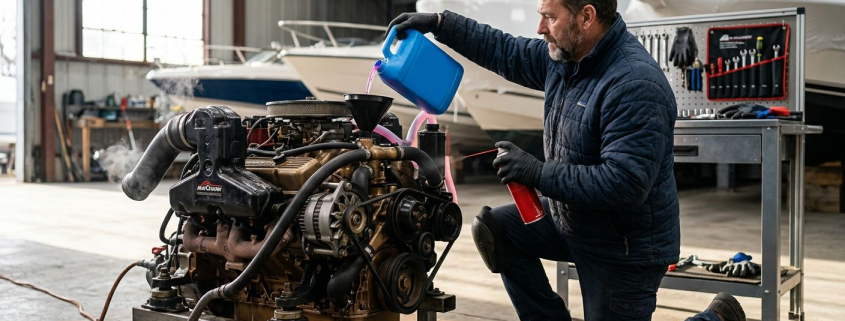
Marine mechanic winterizing a boat engine by pouring bright blue antifreeze into the cooling system with a fogging oil can in hand, set in a dry storage facility with natural window light.

Table of Contents

  • Protecting Your Marine Engine Through Winter
  • Essential Marine Engine Winterization Steps
  • Inboard vs Outboard Marine Engine Winterization
    • Winterizing an Inboard Engine: Key Differences
    • Outboard Engine Winterization Procedure
  • Professional Winterization vs DIY: What You Need to Know
    • The Cost of Professional Marine Engine Winterization
    • Can a Mobile Mechanic Winterize My Boat at the Marina?
  • Winterization for Long-Term Storage and Beyond
  • Frequently Asked Questions About Marine Engine Winterization
  • Secure Your Boat with Expert Winterization Services

Protecting Your Marine Engine Through Winter

Proper marine engine winterization is essential to prevent costly freeze damage and internal corrosion during Ontario’s harsh winter months. In our earlier overview of overall boat winterization, we discussed how comprehensive preparation safeguards your entire vessel. Now, we narrow the focus specifically to your engine—the heart of your boat that requires meticulous care before storage.

Two critical steps ensure your engine survives the cold season intact. A marine engine antifreeze flush displaces any remaining water from the cooling system with non-toxic antifreeze, helping prevent freeze-related cracks in hoses, manifolds, and the engine block. Applying boat engine fogging oil coats the internal cylinder walls, forming a protective barrier that stops rust before it starts while the engine sits idle. These tasks are typically complemented by removing the battery and storing it in a warm, dry location:

  • Perform a marine engine antifreeze flush to safeguard the cooling circuit.
  • Apply boat engine fogging oil to protect cylinders and intake manifolds.
  • Remove the battery and store it indoors to preserve its charge.

At Boat Toronto Inc., our experienced technicians carry out these procedures with precision. We recommend professional boat winterization in Toronto to ensure every detail is covered—from thorough antifreeze flushes and fogging to battery removal. With our safe and efficient transportation, storage, and repairs, your engine remains in peak condition. When spring arrives, a properly winterized engine comes back to life without surprises, allowing you to focus on enjoying the water again.

Essential Marine Engine Winterization Steps

Winterizing your marine engine is the single most important maintenance task you perform all year, directly preventing costly freeze damage and internal corrosion. Proper marine engine winterization follows a proven sequence of draining, flushing, fogging, and oil service, completed before the first hard freeze settles in across the Toronto region.

We recommend starting with complete drainage of the engine block, manifolds, and cooling passages. Leftover water can freeze solid, expand, and crack the block or exhaust components—repairs that routinely cost thousands of dollars. Remove every drain plug, probe the openings with a small wire to dislodge sediment, and let gravity fully evacuate the system before reinserting the plugs.

Four-step marine engine winterization process diagram: drain water, antifreeze flush, fog cylinders, and oil change stages in blue rounded rectangles connected by arrows.

Marine engine winterization process in four steps

With the raw water drained, perform a marine engine antifreeze flush to safeguard the block, circulating pump, and heat exchanger from freezing and corrosion. Using non-toxic propylene glycol antifreeze rated for marine engines, a dedicated flush kit pushes the solution through the intake until it exits the exhaust, displacing residual moisture throughout the cooling jacket. According to Sea Tow’s step-by-step winterization procedure, this antifreeze flush not only prevents freeze damage but also deposits a protective film that resists rust throughout the off-season.

Fogging the engine is the next critical layer of corrosion protection. Spray fogging oil directly into the carburetor or throttle-body intake while the engine runs, coating the cylinder walls, piston rings, and valve stems with a viscous barrier. As an authoritative industry source, Mercury Marine outlines this step for outboard models, noting that the boat engine fogging oil mist should be applied until the exhaust produces a dense white smoke, confirming full internal coverage.

An oil change immediately before storage removes combustion contaminants, moisture, and acidic byproducts that would otherwise sit against precision bearing surfaces for months. Warm the engine, drain the old oil, swap in a fresh filter, and refill with the viscosity recommended by the manufacturer. This single service dramatically extends engine life and reduces the risk of starting-season failures.

Inspect sacrificial anodes, thermostats, and impellers once the fluid services are complete. Worn zincs cannot protect aluminum and stainless components from galvanic corrosion, while a deformed impeller or stuck thermostat can sabotage cooling performance even after careful winterization. For an outboard engine, Mercury Marine’s published checklist includes specific fastener torque values and inspection intervals that further validate the engine winterization process.

For those who value convenience or prefer a professional touch, seeking winterization in Toronto gives your boat the same methodical protection performed by experienced technicians. We handle the entire fluid-exchange sequence and component inspection while you avoid the mess and the risk of a missed step.

After the engine winterization tasks are done, the next priorities shift to the fuel system, fresh-water system, and overall boat storage preparation—each covered in the following sections to give your vessel complete protection until spring launch.

Inboard vs Outboard Marine Engine Winterization

Proper marine engine winterization is the most critical maintenance task any boat owner faces, yet the exact procedure depends entirely on whether your vessel has an inboard or outboard engine. These two engine types require fundamentally different approaches to protect against freezing damage during Toronto’s harsh winter months. Understanding these differences before you begin can save thousands of dollars in repairs and ensure your boat is ready to launch when spring arrives.

The following table provides a quick overview of the key procedural differences between inboard and outboard engine winterization:

Inboard vs Outboard Winterization Comparison
StepInboard EngineOutboard Engine
Engine type identificationClosed cooling system; raw water must be drained and filled with antifreezeOpen system; tilt down, drain completely, then refill with antifreeze
Fogging oil applicationSpray fogging oil into carburetor or intake while engine is runningRemove spark plugs, spray fogging oil directly into cylinders, crank a few seconds
Oil changeChange engine oil and filter after foggingChange lower unit gear oil and engine oil

The clear distinction lies in cooling system design. Inboard engines typically use closed cooling systems that require antifreeze flushing, while outboard engines are open systems that must be fully drained before refilling. The fogging process and oil change requirements also vary significantly between the two types, as detailed in the procedures below.

Winterizing an Inboard Engine: Key Differences

Inboard engine winterization begins with proper identification of your cooling system type. Most modern inboard engines use a closed cooling system where raw water circulates through a heat exchanger, according to industry guidance from Sea Tow. This raw water side must be completely drained to prevent freeze damage, then flushed with a marine engine antifreeze flush solution that protects passages down to the lowest expected temperatures.

The boat engine fogging oil application for inboard engines follows a specific procedure that protects internal components during storage. With the engine running at idle, spray fogging oil directly into the carburetor or air intake until the exhaust produces visible white smoke. This indicates the oil has coated cylinder walls, piston rings, and valve stems with a protective film. Mercury Marine’s manufacturer guidelines emphasize performing this step while the engine runs to ensure complete distribution throughout the combustion chamber.

After completing the fogging procedure, change the engine oil and filter while the engine remains warm from running. This timing allows contaminants suspended in warm oil to drain completely. Refill with fresh marine-grade oil that contains corrosion inhibitors specifically formulated for storage conditions. The old oil contains acids and moisture that would otherwise attack bearing surfaces during the months your boat sits idle.

Outboard Engine Winterization Procedure

Outboard engine winterization follows a fundamentally different sequence because these powerheads are self-draining when tilted to the fully down position. Start by tilting the engine completely vertical so all water drains from the cooling passages through the lower unit. Any water trapped in the powerhead can freeze and crack the engine block, a catastrophic failure that often requires complete engine replacement. Once drained, flush the system with a marine engine antifreeze flush solution to provide additional corrosion protection during storage.

The fogging oil process for outboard engines differs significantly from inboard procedures. Begin by removing all spark plugs from the powerhead, then spray boat engine fogging oil directly into each cylinder through the spark plug holes. Mercury Marine’s official checklist specifies coating cylinder walls, piston tops, and rings thoroughly. After spraying, crank the engine over a few revolutions without starting it to distribute the oil evenly across all internal surfaces. Reinstall the spark plugs finger-tight to prevent moisture intrusion while avoiding compression that could trap humidity inside. Mercury Marine’s outboard winterization checklist provides the authoritative step-by-step reference for this critical protection measure.

Oil changes on outboard engines involve two separate systems that both require attention. The lower unit gear oil must be drained and replaced because any water contamination in the gearcase can freeze and crack the housing. Inspect the drained gear oil for a milky appearance that indicates seal failure and water intrusion. Additionally, change the engine oil if your outboard is a four-stroke model, following the same warm-engine drainage principle used for inboard engines. Two-stroke outboards do not have engine oil to change but still require gearcase servicing.

Regardless of which engine type powers your boat, proper winterization prevents the most common and expensive off-season damage. At Boat Toronto Inc., we handle both inboard and outboard winterization as part of our comprehensive boat winterization services. Our technicians follow manufacturer specifications and industry best practices to ensure your engine receives the correct procedure for its type. Call or Text us for more information about protecting your investment through the winter months.

Professional Winterization vs DIY: What You Need to Know

Proper marine engine winterization is essential for protecting your boat against the devastating effects of freezing temperatures, cracked engine blocks, and moisture-related damage. Boat owners face a key decision: tackle the job themselves or trust a licensed professional. While the DIY route offers a sense of accomplishment, professional service often delivers greater peace of mind through proven checklists and insured workmanship.

The table below breaks down the major differences between the two approaches, helping you weigh cost, tools, risk, and convenience side by side.

DIY vs Professional Winterization
AspectDIYProfessional Service (Boat Toronto)
CostMaterials only (antifreeze, oil, fogging oil); moderate upfront investmentCompetitive flat-rate packages; includes all materials and labour
Required ToolsRequires muffs, fogging kit, oil pump, antifreeze, wrenches, etc.No tools needed; fully equipped mobile or on-site service
Risk of DamageHigher if steps missed (e.g., water left in block, improper antifreeze mix)Licensed and insured; expert process minimizes risk
ConvenienceRequires time, space, and physical effortScheduled at your convenience; we come to you or you bring to our facility

This comparison highlights why many boat owners in Toronto choose professional winterization, especially when harsh Canadian winters demand meticulous preparation. Let’s examine the cost factors and the convenience of mobile service in more detail.

The Cost of Professional Marine Engine Winterization

The price of professional engine winterization depends on several elements: the size and type of your boat, the number of engines, whether you have an inboard, outboard, or sterndrive, and any additional services like shrink-wrapping or battery storage. At Boat Toronto, we structure our winterization packages as competitive flat-rate bundles that include all necessary materials—antifreeze, fogging oil, marine-grade stabilizers—and the labour to perform a thorough marine engine antifreeze flush and system check. This transparency means you know the cost upfront without worrying about hidden add-ons.

According to our experience serving the Greater Toronto Area, professional winterization typically falls within the CAD 300 to CAD 1,500 range, varying with your vessel’s specific needs. While this may seem higher than a DIY budget of roughly CAD 50 to CAD 100 for supplies, the professional route eliminates the risk of expensive post-winter repairs caused by incomplete procedures. For instance, missing a single step like draining the cooling system can lead to a cracked block, a repair that far outweighs the initial savings. Our flat-rate model ensures you receive comprehensive protection without surprise invoices, reinforcing the long-term value of professional care.

Can a Mobile Mechanic Winterize My Boat at the Marina?

Absolutely. We bring our fully equipped mobile service directly to your marina, dock, or storage yard, performing complete winterization on-site. This approach saves you the time and hassle of trailering your boat to a separate facility and allows our licensed technicians to work in the environment most familiar to your vessel. Whether you are berthed at a downtown Toronto marina or at a private dock, our mobile marine engine winterization team arrives with all the antifreeze, boat engine fogging oil, pumps, and diagnostic gear needed to execute every step—from flushing the cooling system to stabilising fuel and removing the battery.

For those who prefer a facility-based service, we also offer winterization at our Toronto location, giving you the flexibility to choose the option that fits your schedule. Both approaches benefit from our insurance coverage and detailed process documentation, which protects you in the rare event of an oversight. DIY enthusiasts can certainly tackle this work, but it demands a complete set of tools—muffs, a fogging kit, an oil extractor, wrenches—and absolute precision. Overlooking even one detail, such as the correct antifreeze ratio, can cause catastrophic engine damage over the winter. If you are exploring the DIY path, educational resources like a Sea Tow membership can provide supplementary guidance, though they cannot replace the hands-on expertise of a seasoned professional. In the end, our winterization services are designed to give you the convenience and confidence you need to launch trouble-free next season.

Winterization for Long-Term Storage and Beyond

Preparing your boat for a long winter layup demands a more comprehensive approach than a short-term hiatus, making thorough marine engine winterization essential for any extended off-season. When a vessel sits idle for months in freezing temperatures, water left inside the engine can freeze and crack the block, while fuel degrades and internal components corrode. At Boat Toronto Inc., we protect your investment with a meticulous process that follows industry-leading standards, so your boat emerges from storage ready for the water.

Every long-term engine winterizing procedure we perform addresses these core steps:

  1. Fogging the engine – We apply boat engine fogging oil directly into the carburetor, throttle body, or spark plug holes while the engine is running. This coats cylinders, piston rings, and valves with a protective film that displaces moisture and prevents rust during months of inactivity.
  2. Antifreeze flushing – A proper marine engine antifreeze flush pushes propylene glycol-based marine antifreeze through the raw-water cooling circuit until it exits the exhaust. This step is critical: automotive antifreeze contains corrosion inhibitors that can damage marine cooling components, so we only use marine-grade formulations rated for engine protection.
  3. Oil and filter change – Used engine oil holds moisture and acidic combustion by-products that attack bearings over time. Draining old oil and installing a fresh filter removes these contaminants before the boat sits idle.
  4. Fuel system stabilization – We top off the fuel tank and add a high-quality stabilizer to prevent phase separation in ethanol-blended fuels and gum formation in the entire fuel system.
  5. Battery removal and storage – Batteries self-discharge faster in cold weather and can freeze if left in a depleted state. We disconnect them, clean the terminals, and store them in a temperature-controlled environment.

These procedures align with the outboard winterization checklist published by Mercury Marine, the recognized industry standard for correct cold-weather engine prep. Always consult your own owner’s manual for model-specific instructions, as some engines require additional steps such as draining the gear-case lubricant or treating sealed cooling systems differently.

For boat owners in Toronto, trusting these tasks to our team means your marine engine winterization is done thoroughly, using the right materials, and without the risk of missed steps. We offer competitively priced winterization as part of our complete storage packages that include pick-up and drop-off service throughout the Greater Toronto Area. Each job receives individual attention from technicians who know how damaging a Canadian winter can be to an unprotected engine. Call or text us today for a free custom quote, and let us handle the layup so your focus stays where it belongs—on next season’s boating.

Frequently Asked Questions About Marine Engine Winterization

Why is marine engine winterization important?
Marine engine winterization is critical to prevent freeze damage and internal corrosion during storage. Without proper preparation, trapped water can freeze and crack the engine block, leading to costly repairs. We protect your investment by ensuring every component is ready for Toronto’s harsh winter.

What are the key steps in winterizing a marine engine?
The process includes stabilizing the fuel, changing the oil, performing a marine engine antifreeze flush, fogging the cylinders, and caring for the battery. Each step works together to safeguard the engine’s internal parts from moisture and corrosion while in storage.

What is a marine engine antifreeze flush and why is it needed?
A marine engine antifreeze flush pushes non-toxic antifreeze through the cooling system to displace any remaining raw water. This prevents freezing and corrosion inside the block and manifolds, ensuring the engine remains intact and ready for spring.

Should I winterize my boat if it is stored indoors?
Yes, even indoor storage can expose your engine to freezing temperatures if the space is unheated. We recommend a full winterization every season, regardless of storage type, to maintain reliability and avoid unexpected damage.

How much does professional service cost?
Our pricing is competitive and based on your boat’s specific needs. Contact us for a free custom quote that covers every aspect of safe and efficient service.

If you have more questions about protecting your boat, call or text us for more information.

Secure Your Boat with Expert Winterization Services

Securing your boat for the harsh Ontario winter starts with professional winterization — an investment that protects your vessel and ensures it’s ready for the next season. We perform marine engine winterization as a core service, using a complete antifreeze flush and boat engine fogging oil to shield internal components from freeze damage and corrosion. Our team brings the right equipment and hands-on care to every job, so you can feel confident your boat is protected while in storage. Call or text us for a free custom quote and to learn more about our full winterization and storage packages.

Resources

  • Get Expert Boat Winterization in Toronto
  • Get Professional Winterization and Storage in Toronto
  • Compare Professional and DIY Winterization in Toronto
  • Find Affordable Winterization Services in Toronto
  • Discover Advanced Boat Maintenance Services in Toronto
  • Explore Innovative Boat Maintenance in Toronto
  • Discover Reliable Boat Maintenance Services in Toronto
  • Get Sea Tow Membership for On-Water Assistance
  • Get the Outboard Winterization Checklist from Mercury
June 25, 2026/by Lukas A
https://boattoronto.ca/wp-content/uploads/2026/06/featured-270cc3bb-145c-4cb4-839c-4c4e07d7fdf8.jpg 768 1408 Lukas A /wp-content/uploads/2024/05/logo-300x138.png Lukas A2026-06-25 18:40:012026-06-25 18:40:01Marine Engine Winterization: Step-by-Step Guide for Boaters
Boat Insurance & Legal, Boat Owner Resources, Boat Storage & Winterization, Boating News & Safety, Marine Transportation, Toronto Marine Services

Boat Transport Insurance Canada: Essential Guide for Boat Owners

Table of Contents

  • Understanding Boat Transport Insurance in Canada
  • What Insurance Do Boat Haulers in Canada Need?
    • Cargo Liability vs. Hull Coverage
    • Standard Minimums for Licensed Carriers
  • Is Your Yacht Covered by Standard Marine Insurance During Road Transport?
    • The Overland Transit Exclusion
    • Endorsements and Riders for Transport
  • Local Considerations for Boat Transport Insurance in Toronto
  • Getting Started with Boat Transport in Toronto
    • Step 1 – Verify the Hauler’s Insurance Certificate
    • Step 2 – Confirm Your Own Policy Covers Overland Transit
  • Your Path to Secure Boat Transport in Toronto

Understanding Boat Transport Insurance in Canada

Arranging boat transport insurance Canada is a critical step for any vessel owner planning to move their boat across town or across the province. This specialized coverage protects against physical damage, theft, and liability while the boat is being hauled over the road on a trailer, ensuring the owner is not left to bear the financial burden of an incident during transit.

Reputable carriers carry both commercial liability coverage and cargo insurance that specifically covers the vessel in their care. As the federal authority, Transport Canada sets marine safety standards that licensed carriers follow, governing everything from securement to route planning, and offers guidance on vessel documentation such as the pleasure craft licence. For reliable boat transport in Toronto, our licensed and insured fleet uses a Conolift hydraulic trailer to safely handle vessels up to 50 feet.

Choosing a provider that combines comprehensive insurance with state-of-the-art equipment and experienced personnel is the foundation of safe and efficient transportation. Understanding what insurance covers is the first step; next, we break down the specific protections you can expect.

What Insurance Do Boat Haulers in Canada Need?

Once you have selected a hauler, understanding the insurance coverage in place is critical. Licensed carriers like Boat Toronto carry comprehensive policies to ensure your vessel receives safe and efficient transportation, but owners should also understand their own responsibilities regarding boat transport insurance in Canada.

Cargo Liability vs. Hull Coverage

Cargo liability—carried by the hauler—provides limited protection based on the boat’s weight or declared value. This is separate from your own hull insurance, which covers the craft’s full agreed value but is typically subject to a deductible. The key distinction is that the hauler’s policy responds to incidents during transit, while your hull coverage may require a special overland transport endorsement to remain active. For larger vessels requiring yacht transportation services, this gap in coverage becomes even more critical to address before the move.

Standard Minimums for Licensed Carriers

In Canada, transport companies must meet regulatory insurance thresholds. General liability of $1M–$2M is standard, protecting against third-party injury or property damage during the haul. Licensed carriers operating in compliance with marine transportation in Canada oversight also carry cargo policies, though the per-incident limits vary. When hydraulic trailer boat transport equipment is used, the loading and unloading process itself—from the slings or trailer to the road—typically falls under the hauler’s cargo liability, not the owner’s hull policy. We recommend you confirm the specific limits with any carrier before booking.

The table below summarises who pays for what in common damage scenarios.

Coverage Comparison – Hauler vs. Owner
Coverage AspectHauler’s PolicyOwner’s Policy
Physical damage to boat during road transportCargo liability (limited per-pound or per-value)Hull insurance (full value, subject to deductible)
Third-party injury / property damageGeneral liability (usually $1M-$2M)Not applicable (owner not in control of vehicle)
Loading/unloading damageCovered under cargo liabilityTypically excluded during transit
Overland transport extension needed?Not required – carrier provides its own policyYes – must request overland transit endorsement

Most standard hull policies exclude damage that occurs while the boat is being moved over land, which is why owners should always request an overland transit endorsement from their insurer. Boat Toronto’s team maintains fully licensed and insured status for every transport, and we can provide policy details when you request a free custom quote.

Comparación de seguros de transporte de embarcaciones en Canadá: responsabilidad civil vs. cobertura de casco.

With the right insurance in mind, let’s look at how the actual transport process unfolds.

Is Your Yacht Covered by Standard Marine Insurance During Road Transport?

When arranging boat transport insurance in Canada, many owners are surprised to learn that their standard marine policy excludes road transit completely. We routinely encounter clients who assume their comprehensive yacht policy follows the vessel everywhere, only to discover during a haul-out that they have been uninsured the moment the boat rolls onto a trailer. Understanding this exclusion and how to fill the gap is essential before you book any yacht transportation services.

The Overland Transit Exclusion

Standard marine insurance policies contain a clear overland transit exclusion. Once a yacht is lifted from the water and secured on a hydraulic trailer for boat transport, the hull coverage and liability protection that apply on the water are void. Without an additional endorsement, damage from road hazards, an accident during transport, or liability for third-party injuries would rest entirely with the owner. We have seen policies with varying exclusion language, but the outcome is the same: if no rider is on file, the vessel is fully uninsured on the road.

Endorsements and Riders for Transport

Insurers address this gap with two options. A transit endorsement covers a single scheduled move and is the most cost-effective choice for infrequent haul-outs. A recurring rider is better suited for boats that travel by road several times a year. We recommend contacting your insurer at least 48 hours before the move and ensuring that your pleasure craft licence is up to date, as many companies require this as a prerequisite. According to our internal FAQs, some insurers also request a pre-transport survey to validate the endorsement, and we can coordinate that inspection alongside the haul-out. Without this simple step, you are exposed to significant financial risk.

Adding a transit rider is a straightforward measure that delivers peace of mind — a service we can help coordinate as part of safe and efficient transportation. For a free custom quote on your next move, storage, and repairs, Call or Text us for more information.

Local Considerations for Boat Transport Insurance in Toronto

When looking for boat transport insurance in Canada, Toronto residents face additional local factors that influence coverage and risk assessment. While nationwide policies provide a baseline, boat owners in Toronto must account for these local nuances: Ontario mandates minimum liability insurance for trailers and towing vehicles on public roads, a foundational requirement any policy must meet. We also find that local storage yards, including facilities we work with, often require proof of comprehensive coverage before accepting a vessel, as detailed by Boat Toronto. Lake Ontario’s weather patterns, from sudden summer squalls to winter ice, can heighten insurers’ risk models, making all-risk or named-peril coverage a prudent consideration during transport. For larger vessels requiring yacht transportation services, the Canadian Safe Boating Council’s recommended best practices, such as proper weight distribution and secure tie-downs, are often recognized by insurers and may positively affect premiums when hydraulic trailer boat transport equipment like our Conolift is used. We recommend confirming cross-border policy compliance with Canada’s Marine Liability Act for any routes connecting to the U.S. Understanding these local considerations helps secure the most reliable boat transport coverage for your vessel.

Getting Started with Boat Transport in Toronto

Arranging boat transport in Toronto involves more than scheduling a haul—it starts with verifying insurance. Proper coverage protects your vessel from financial loss during the move, and we recommend completing these two steps before booking. Understanding boat transport insurance in Canada gives you confidence that both your hauler and your own policy provide the necessary protection.

Step 1 – Verify the Hauler’s Insurance Certificate

We advise requesting a certificate of insurance from any hauler you’re considering. Confirm the cargo liability limit at least equals your vessel’s value and check the policy’s effective and expiry dates. The hauler should also comply with marine safety in Canada standards set by Transport Canada, including proper licensing and route planning. The most reliable boat transport providers, like us, carry full insurance and share documentation without hesitation.

Step 2 – Confirm Your Own Policy Covers Overland Transit

Contact your marine insurer and request a transport endorsement for overland moves during yacht transportation services. Before the move, document your boat’s condition with dated photos and a written report. For hydraulic trailer boat transport on equipment such as our Conolift, this record simplifies any claim process. Boat Toronto’s FAQ page offers a downloadable document checklist to help organize these steps. Once your insurance is confirmed, you can proceed to prepare your boat for loading.

Your Path to Secure Boat Transport in Toronto

Whether your boat needs a new home or a seasonal move, we make booking secure boat transport in Toronto straightforward. Call or Text us for a free custom quote and tell us your vessel’s type, size, and intended route. Our team returns a competitive, obligation-free price that includes licensed, insured, and bonded coverage meeting boat transport insurance Canada requirements. For larger vessels, our yacht transportation services rely on a hydraulic trailer boat transport system—the Conolift, which cradles craft up to 50ft without a crane and reduces handling risk. We coordinate route planning through Toronto’s bridges, lake crossings, and oversize-load permits so every mile is deliberate. For additional guidance, refer to safe boating resources in Canada provided by the Canadian Safe Boating Council. Contact us today to schedule your secure transport.

Resources

  • Review Proposed Changes to Pleasure Craft Licences
  • Renew Your Pleasure Craft Licence in Ontario Online
  • Book Professional Boat Transport Services in Toronto
  • Download a Free Boat Winterization Checklist PDF
  • Compare Costs for Boat Transport Across Canada
  • Learn How to Winterize Your Boat in Toronto
  • Get Professional Boat Winterization Services in Toronto
  • Explore Transport Canada Marine Transportation Portal
  • Review Marine Safety Programs from Transport Canada
  • Find Safe Boating Resources for Canadian Waters
  • Learn About Canadian Coast Guard Marine Services
June 1, 2026/by Lukas A
/wp-content/uploads/2024/05/logo-300x138.png 0 0 Lukas A /wp-content/uploads/2024/05/logo-300x138.png Lukas A2026-06-01 18:20:352026-06-01 18:20:35Boat Transport Insurance Canada: Essential Guide for Boat Owners

Follow us on Facebook

Latest Projects

  • Project 6 – Living Room DesignOctober 30, 2015 - 5:09 pm
  • Project 5 – More InteriorOctober 30, 2015 - 5:07 pm
  • Project 4 – Office TowerOctober 21, 2015 - 3:47 pm
  • Project 3 – HotelOctober 21, 2015 - 3:43 pm

Powered by Google Reviews

Contact Us

lukas@boattoronto.ca

1-855-551-BOAT

The pessimist complains about the wind; the optimist expects it to change; the realist adjusts the sails.
-William Arthur Ward

Address

274 Unwin Ave
Toronto, Ontario
M5A 1A3 Canada

Call before visiting us.
Visits are by appointment only.

Scroll to top
      • Boat Repair Toronto Resources
      • Affordable Boat Repair Services In Toronto
      • Mobile Boat Repair Toronto
      • Marine Repair Services Toronto Resources
      • Professional Marine Engine Repair Toronto
      • Boat Engine Repair Toronto
      • Boat Transportation Toronto Resources
      • Reliable Boat Transportation Companies Toronto
      • Boat Transport Service Toronto
      • Boat Hauling Services Toronto Resources
      • Insured Boat Hauling Services Toronto
      • Boat Hauling Companies Toronto
      • Boat Maintenance Toronto Resources
      • Emergency Boat Repair Services Toronto
      • Boat Maintenance Service Toronto
      • Shrink Wrap My Boat Resources
      • Shrink Wrap Boat Service
      • Shrink Wrap Marine
      • Boat Trailer Transport Toronto Resources
      • Boat Trailer Transport Services Toronto
      • Boat Transport Quotes Toronto
      • Yacht Repair Toronto Resources
      • Toronto Yacht Mechanics
      • Toronto Yacht Services
      • Boat Winterization Toronto Resources
      • Boat Winterization Services Toronto
      • Boat Winterization Near Me Toronto
      • Ontario Marine Mobile Services Resources
      • Mobile Marine Mechanic Near Me
      • Mobile Mechanic Ontario CA
      • Boat Toronto Resources
      • Boat Toronto Reviews
      • About Boat Toronto
      • Blog
      • FAQ
      Articles
    © 2026 Boat Toronto Inc.